You might be reading this because something has already gone sideways. The shower in a Cottonwood townhome has been leaking for days and no one agrees on who should arrange the repair. A tenant in Silver Valley has received a notice and isn't sure whether it's valid. A homeowner in Albion is thinking about renting out a basement suite and assumes a simple handwritten agreement will cover everything.
That's usually when the BC Residential Tenancy Act stops feeling abstract.
In Maple Ridge, the Act is the working rulebook for everyday rental decisions. It affects how repairs are handled, how deposits are returned, how notice must be given, and whether a tenancy can legally end. If you own a rental near Kanaka Creek, manage a condo in West Maple Ridge, or rent a suite close to Samuel Robertson Technical Secondary, these rules shape the relationship from day one.
A lot of online guides explain the basics. Fewer deal with the local grey areas that create the most trouble, especially shared housing, informal suites, and eviction disputes that overlap with human rights issues. That's where landlords get exposed and tenants get surprised.
Navigating Landlord and Tenant Rules in Maple Ridge
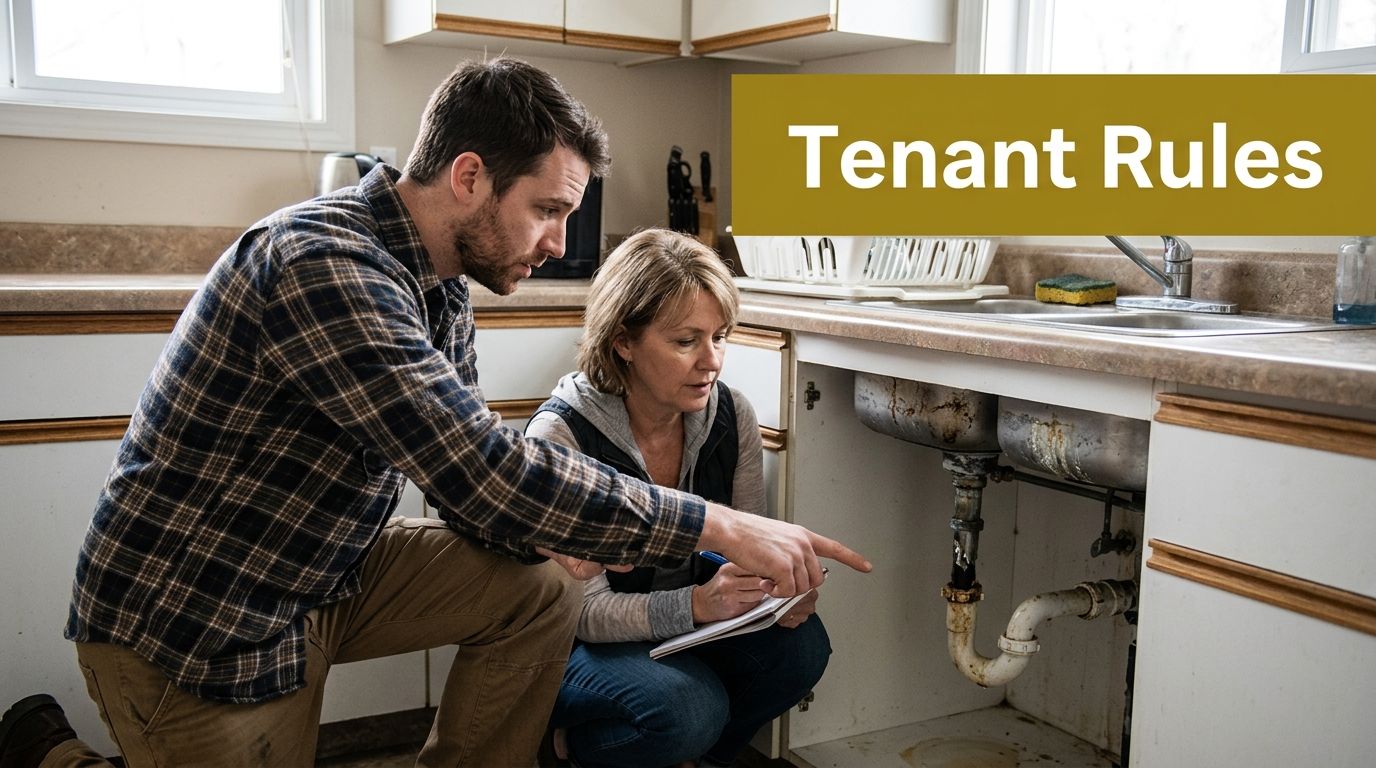
A common Maple Ridge dispute starts small. The tenant reports a plumbing issue. The landlord thinks it can wait until the weekend. The tenant thinks it's urgent because water is already damaging the cabinet base. Both sides get frustrated, texts start piling up, and suddenly the relationship feels hostile.
That kind of conflict isn't usually about personality. It's about unclear expectations.
Why the Act matters before problems start
The Residential Tenancy Act works best when both sides treat it as the baseline, not as a weapon to pull out after an argument. In practice, that means the landlord knows what notice is required, what can go into the tenancy agreement, and how to document issues properly. It also means the tenant knows what they must report, what they must pay, and what the landlord is responsible for.
In neighbourhoods like Albion and Silver Valley, where many rentals are part of owner-occupied homes, assumptions cause more trouble than bad intentions. Someone rents a room, a garden-level suite, or a newer basement unit near a school catchment they want, then only later realises the legal setup may not work the way they expected.
Practical rule: Most tenancy problems become expensive because the paperwork and communication were weak at the start.
That's why screening matters as much as the lease itself. If you're setting up a new tenancy, a practical review of landlord screening best practices can help you avoid avoidable disputes before keys change hands.
What this looks like on the ground
A professional tenancy in Maple Ridge usually has a few things in place from the beginning:
- Clear written terms: Everyone knows the rent date, occupancy limits, and house rules.
- Repair reporting in writing: Texts can help, but organised records matter more when facts are disputed.
- Realistic expectations: A tenant can't treat every issue as a crisis. A landlord can't ignore maintenance because the property is “still livable.”
- Current legal awareness: The rules do change, and owners who bought years ago often rely on outdated assumptions. The recent new rules for landlords in BC that home buyers should know are a good reminder that tenancy law affects purchase decisions too.
The best rental relationships in Maple Ridge don't happen by luck. They're built on structure, documentation, and a shared understanding of the rules.
The Foundation of a BC Tenancy Agreement
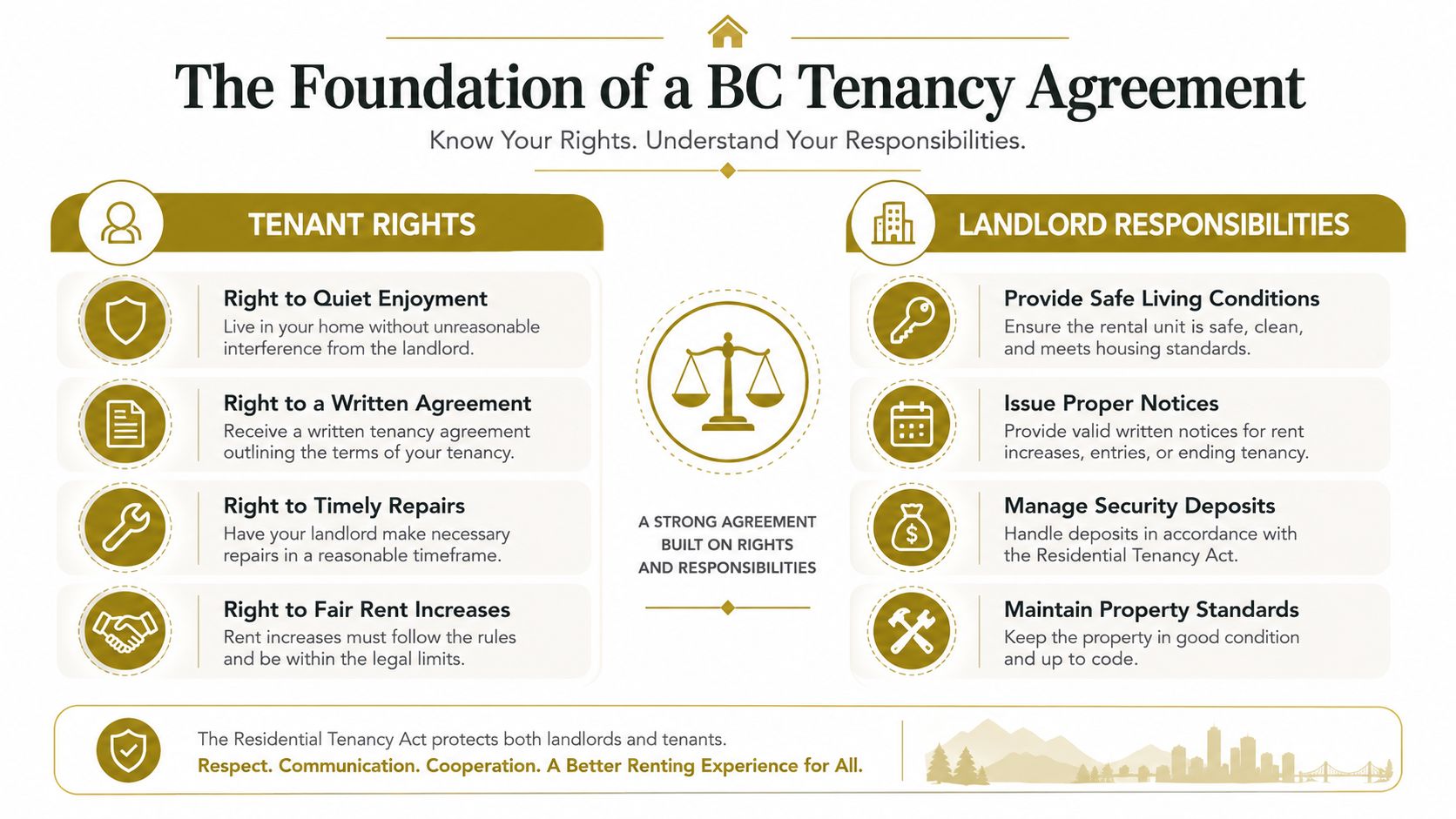
A tenancy agreement in British Columbia is more than a rent amount and a move-in date. It sets the daily operating rules for the property. If those terms conflict with the law, the law wins.
That's the part many new landlords miss. A lease cannot state whatever the owner wants and become enforceable because both sides signed it. The RTA creates a framework that both landlord and tenant have to work within.
The basic exchange
A lawful tenancy is a trade.
The landlord provides a safe, usable home and follows the legal process for notices, entry, and property management. The tenant pays rent, cares for the unit, and respects the property and the people around it.
A simple way to think about it is this:
Tenant sideLandlord sidePays rent on timeProvides the agreed rental homeKeeps the unit reasonably cleanMaintains the property to a proper standardAvoids unreasonable disturbanceRespects privacy and proper processFollows lawful terms of the agreementUses lawful notices and lawful deposit handling
In Maple Ridge, this balance matters in every housing type. A condo near the town core, a detached house in West Maple Ridge, and a suite near Alouette River all come with different practical issues, but the legal foundation stays the same.
Rights and duties people confuse most often
Tenants often assume “quiet enjoyment” means total control over the home. It doesn't. It means they're entitled to live there without unreasonable disturbance or interference.
Landlords often assume ownership gives them broad discretion. It doesn't. Owning the property doesn't let you skip required notice periods or make up your own financial rules.
A good lease reduces friction, but it doesn't replace the Act.
The strongest agreements are plain, specific, and current. If you need a working reference point, this tenant lease agreement template helps show how a BC tenancy should be structured in practical terms.
Recent rule changes that matter
Owners planning major renovations or repairs need to pay close attention to the current process. In British Columbia, a landlord who needs a rental unit vacant for extensive renovations or repairs must generally obtain the required permits and apply to the Residential Tenancy Branch for an order ending the tenancy and granting possession. Demolition or conversion of a rental unit follows a separate notice process. These requirements should be checked against current Residential Tenancy Branch guidance before an owner makes renovation or redevelopment plans.
That matters in a place like Maple Ridge, where older homes are often bought for updates, redevelopment, or suite reconfiguration. A buyer who assumes they can take possession quickly for major work can make a costly planning mistake.
What works and what doesn't
What works is boring. Written agreements. Clean records. Proper forms. Realistic communication.
What doesn't work is improvising after the fact. A landlord can't repair a weak lease by sending emotional messages later. A tenant can't ignore written obligations and hope a verbal understanding will carry more weight.
If you want the shortest version of BC residential tenancy act explained, it's this: the agreement matters, but the law sets the floor, and neither side gets to contract out of it.
The Financials of Renting in Maple Ridge
Most tenancy disputes aren't really about legal theory. They're about money, timing, and proof.
Deposits are a classic example. Everyone thinks they understand them until the tenancy ends and there's a disagreement over cleaning, wear, damage, or missing information. That's when a simple rule becomes very important.
Deposits and the 15-day rule
Under the BC Residential Tenancy Act, security deposits are limited to a maximum of half a month's rent. At the end of a tenancy, the landlord generally has 15 days after the later of the tenancy ending or receiving the tenant's forwarding address in writing to return the deposit with applicable interest or apply for dispute resolution to claim against it.
That timeline catches people off guard.
Landlords sometimes spend too long debating deductions, waiting for quotes, or assuming they can hold the money while they decide. Tenants sometimes move out without giving proper forwarding details and then expect immediate payment. The rules are strict, and strict timelines don't leave much room for casual administration.
Where disputes usually start
In Maple Ridge, deposit arguments tend to come from ordinary situations:
- Move-out cleaning disagreements: One side says the unit was left in decent condition. The other says it needed substantial cleaning.
- Damage versus wear: Scuffed paint and used flooring aren't always damage. Broken fixtures and preventable damage are a different matter.
- Missing documentation: Without proper records, both sides end up arguing from memory.
- Delayed action: A landlord who waits too long loses their advantage quickly.
If you want a more focused walkthrough, these damage deposit rules in BC are worth reviewing before a tenancy ends, not after.
Repairs and financial friction
Repair disputes also become money disputes fast. A tenant may think, fairly or unfairly, that rent buys immediate action. A landlord may think a repair can wait because the issue isn't catastrophic. In practice, the fastest way to reduce conflict is to separate urgency from annoyance.
Try this working approach:
- Document the issue immediately. Photos, dates, and a written description matter.
- Identify whether the problem affects safety or essential use. No one benefits from vague messages like “the place is falling apart.”
- Respond in writing. Even a short acknowledgement helps establish a timeline.
- Keep receipts and contractor communication organised. If a dispute reaches the RTB, orderly records matter more than strong opinions.
If money is involved, assume the timeline and paperwork will matter as much as the actual problem.
A Maple Ridge reality check
Owners with rentals near schools, parks, and family-oriented areas like Hammond or Cottonwood often attract long-term tenants. That can be a good outcome, but only if the financial side of the tenancy stays predictable. Deposit handling, repair follow-up, and rent administration shouldn't feel improvised.
Tenants should also be realistic. The law gives protection, but it also expects tenants to communicate properly, pay on time, and avoid creating preventable maintenance problems.
The financial side of renting isn't glamorous. It's administrative. But in day-to-day property management, strong administration is what keeps ordinary issues from becoming formal disputes.
Understanding Evictions and Ending Tenancies Lawfully
Ending a tenancy is where mistakes become expensive. A casual text, a homemade notice, or a rushed decision tied to a sale can put the whole process at risk.
In Maple Ridge, this comes up constantly when owners sell a tenanted property, move family into a home, or deal with repeated non-payment. The issue usually isn't whether the owner has a reason. The issue is whether they used the correct legal path.
The main notice paths
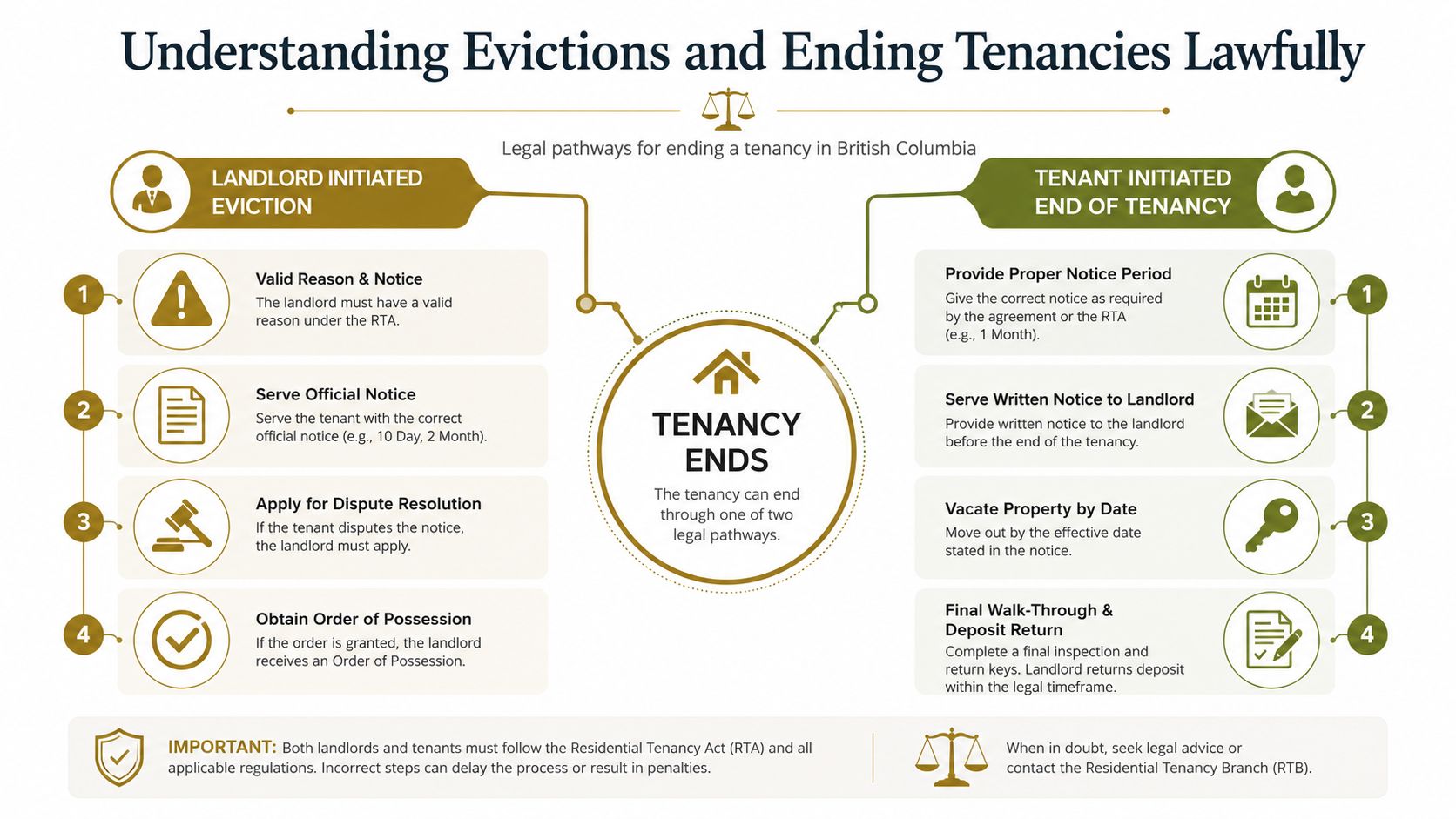
Some of the most important notice periods are straightforward once you separate them by cause.
- Non-payment of rent: The RTA uses a 10-day Notice for unpaid rent.
- Cause: A One Month Notice can apply for issues such as repeated late rent, serious property damage, illegal activity, or disturbing the peace.
- Landlord or buyer occupancy: A longer notice period applies when the property will be occupied by the landlord, a close family member, or a purchaser who will live there.
That last category has changed in a meaningful way.
The BC Residential Tenancy Act uses different notice periods depending on the reason a tenancy is ending. Non-payment of rent generally uses a 10-day notice, while certain causes use a one-month notice. For landlord or purchaser occupancy, the current process requires a three-month Notice to End Tenancy generated through the Residential Tenancy Branch web portal, and tenants generally have 21 days after receiving that notice to dispute it. Because these rules have changed in recent years, landlords and buyers should always confirm the current RTB requirements before serving or relying on a notice.
For sellers in neighbourhoods like Silver Valley and Albion, that change is not minor. A buyer who wants occupancy cannot assume a short transition.
What usually goes wrong
A lawful eviction often fails for practical reasons, not because the landlord had no grounds.
Common mistakeWhy it causes troubleUsing the wrong notice typeThe notice can be challenged or dismissedListing vague reasonsWeak details hurt credibility and evidenceActing before the process is completeSelf-help eviction exposes the landlordTreating a sale as automatic groundsOccupancy rules and notice periods still apply
A lot of owner disputes also involve utilities, especially when a tenant leaves behind unpaid accounts or the billing setup was never clarified. If that issue is part of a broader tenancy problem, this guide on managing unpaid tenant utility bills is a practical companion.
A short overview can help anchor the process before a dispute starts.
The Human Rights Code issue many landlords miss
This is one of the biggest blind spots in online articles about BC residential tenancy act explained.
The Residential Tenancy Act does not exist in isolation. In some disputes, the BC Human Rights Code changes the analysis. If discrimination is involved, an RTA notice that looks valid on paper may not hold up the way a landlord expects.
The issue often appears when a tenant has a disability and asks for accommodation connected to rent, behaviour, or use of the property. A landlord who ignores that context and pushes ahead as if it's a standard payment or breach file may create a larger problem than the original tenancy issue.
A legally available notice can still become risky if the facts point to discrimination or a failure to accommodate.
That's why evidence matters. If you're headed into a hearing or preparing one, it helps to understand the RTB dispute resolution process before notices are served or challenged.
What works in real life
Landlords who handle evictions properly tend to do the same few things well. They use the correct form, keep written records, match the notice to the actual facts, and avoid emotional communication.
What doesn't work is trying to force speed into a legal process that isn't designed for improvisation. If you're selling, buying, or repositioning a rental property in Maple Ridge, tenancy law has to be part of the transaction strategy from the start.
When the Residential Tenancy Act Does Not Apply
One of the most damaging assumptions in BC renting is that every rental arrangement falls under the RTA. It doesn't.
That misunderstanding shows up all the time in Maple Ridge. A homeowner rents out a room. A student rents space in a house near transit and thinks they have full RTB protection. A basement suite is set up informally and everyone assumes the usual tenancy rules apply. Then a dispute happens, and one side learns too late that the forum they planned to use may not have jurisdiction.
The shared kitchen or bathroom exclusion
A critical RTA exclusion that many are unaware of is that tenants sharing a kitchen or bathroom with the owner are not protected by the Act. With over 18,000 unpermitted secondary suites in Metro Vancouver, many renters in these informal agreements mistakenly believe they have RTB protections when their only recourse for disputes is through civil court or the Civil Resolution Tribunal (Law Foundation BC residential tenancy law guide).
That point matters in Maple Ridge because informal housing is common. In areas with growing suite density, including parts of Albion and nearby hillside neighbourhoods, room rentals and owner-shared spaces can look like ordinary tenancies even when the legal framework is different.
Why this changes the whole dispute
If the RTA doesn't apply, the Residential Tenancy Branch usually isn't the place to solve the problem.
That means:
- The RTB route may be unavailable: You may need to look to civil court or the Civil Resolution Tribunal instead.
- Standard eviction assumptions may be wrong: A notice form used for a normal tenancy may not govern the relationship.
- Marketing language matters: Owners should be careful about how they present the space and the arrangement.
- Informal agreements create more risk: Casual renting often produces the weakest records when a dispute lands.
Shared accommodation can feel like a normal tenancy in daily life, while operating under very different legal rules.
Maple Ridge owners should think about this early
This is particularly relevant for people buying homes with mortgage helpers, older basement conversions, or flexible living arrangements for family. A property's layout can affect whether a rental arrangement falls inside or outside the RTA. That isn't just a property management issue. It's also a purchase and resale issue.
Buyers looking at alternative housing formats should also understand that different property types can come with different rule sets. For example, manufactured homes and their unique ownership rules raise a separate set of questions that don't fit neatly into a standard detached-home checklist.
If there's one grey-area lesson worth remembering, it's this: don't assume “rental” automatically means “RTA protected.”
Your Next Steps in Maple Ridge Real Estate
The best way to read the Act is not as a list of technical rules, but as a risk map.
If you're a tenant, it shows where your protections are strongest and where your obligations are strictly defined. If you're a landlord, it shows where process matters more than intention. That includes notices, deposits, documentation, and the legal status of the rental itself.
The practical takeaway
A clear understanding of the RTA helps with more than dispute prevention.
It also helps you make better real estate decisions in Maple Ridge:
- Investors need to know how tenancy rules affect cash flow, possession timing, and renovation plans.
- Home sellers need to understand how a tenanted property changes buyer expectations and transaction timing.
- Home buyers need to ask whether a suite is lawful, whether a tenancy is in place, and whether occupancy assumptions are realistic.
- Owners of shared or informal rentals need to know whether the RTA applies at all.
Around Maple Ridge, these questions come up in every kind of housing decision. A family buying near Kanaka Creek for school access may need to understand an inherited tenancy. A downsizer selling in West Maple Ridge may need to market a tenanted property properly. An investor looking in Cottonwood may see rental income on paper but miss the legal structure behind it.
What usually leads to better outcomes
Good outcomes tend to come from the same habits:
- Check the legal status of the occupancy early.
- Match your plan to the correct notice and process.
- Keep records that would make sense to a third party.
- Treat tenancy issues as part of the property decision, not as an afterthought.
That's especially true in a local market where basement suites, family-use plans, and multigenerational living arrangements are common. Maple Ridge isn't just rows of identical rental units. It's a mix of detached homes, townhomes, condos, and secondary spaces, and the legal details often turn on that mix.
If you're buying or selling here, tenancy law and real estate strategy should work together. That's where a lot of avoidable problems can be prevented before they become expensive.
If you're planning to buy, sell, or manage a tenanted property in Maple Ridge or Pitt Meadows, Royal LePage Brookside Realty Property Management can help you make sense of the local market and the practical issues that come with it. Whether you're evaluating a property with a suite, preparing to sell a tenant-occupied home, or looking for clear guidance before your next move, their team brings local knowledge and steady advice to the process.